

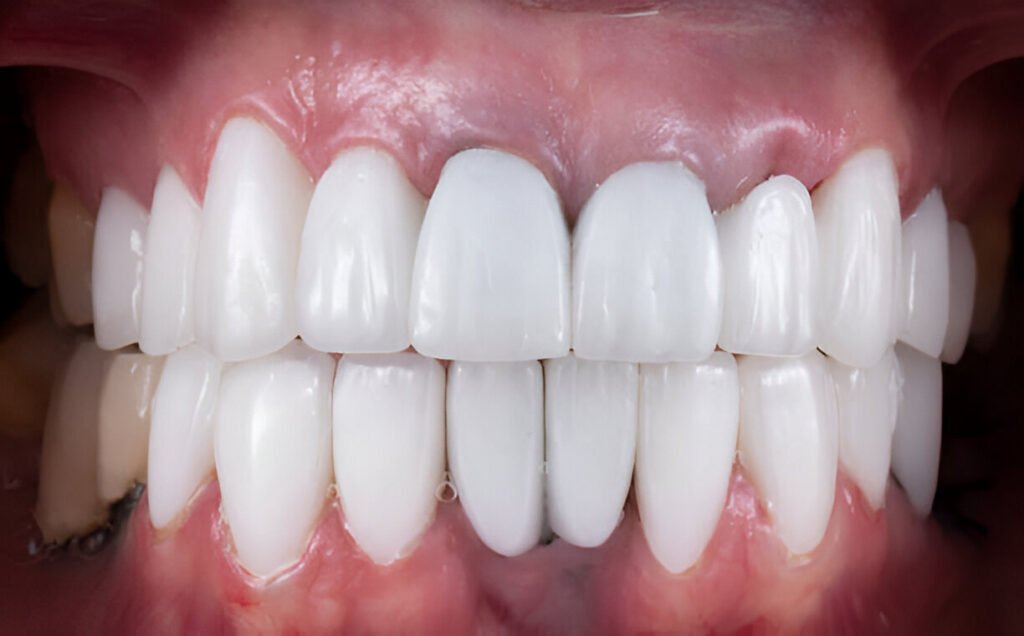
Composite bonding cannot usually be whitened with standard teeth whitening treatments.
This is because composite resin does not respond to hydrogen peroxide or carbamide peroxide — the active bleaching agents used in professional and at-home teeth whitening systems.
While natural tooth enamel may lighten during whitening treatment, composite bonding typically stays the same colour. This can sometimes make bonded teeth appear more noticeable or uneven after whitening.
However, if composite bonding has become stained or yellow over time, there are still several professional options available to improve its appearance without necessarily replacing all the bonding.
Why Composite Bonding Does Not Respond to Teeth Whitening
Natural teeth contain porous enamel that can be chemically lightened using whitening agents such as:
- Hydrogen peroxide
- Carbamide peroxide
Composite bonding works differently.
Bonding material is made from resin composite, which does not absorb whitening gels in the same way as natural enamel. As a result:
- Teeth may whiten
- Bonding usually remains unchanged
- Colour mismatch may become more noticeable
Whitening treatment cannot reliably reverse deep staining or yellowing inside composite resin material itself.
My Composite Bonding Is Yellowing — What Can I Do?
This is the section Google actually wants.
Over time, composite bonding may become stained from:
- Coffee
- Tea
- Red wine
- Smoking
- Curry
- Poor oral hygiene
- Surface wear
The good news is that yellowing does not always mean full replacement is necessary.
Professional options may include:
- Composite polishing
- Surface stain removal
- Recontouring
- Surface layer replacement
- Full bonding replacement in severe cases
This matches the emotional/search intent perfectly.
What CAN Be Done for Stained Composite Bonding
1. Professional Polishing
Mild surface staining can sometimes be improved with professional polishing.
Dentists may use:
- Fine polishing discs
- Composite polishing paste
- Air polishing systems
This can help remove external staining and restore shine to the bonding surface.
2. Surface Refinishing or Recontouring
If staining affects only the outer layer of the bonding, dentists may gently smooth or refinish the surface.
This can improve:
- Texture
- Shine
- Surface discolouration
- Minor roughness
3. Partial Composite Repair
In some cases, only the stained portion of bonding needs replacement rather than the entire restoration.
This may help:
- Blend colour better
- Improve aesthetics
- Extend bonding lifespan
4. Full Composite Bonding Replacement
Severe yellowing, wear, or old bonding may eventually require complete replacement.
Replacement may be recommended when:
- Bonding becomes heavily discoloured
- Margins begin staining
- Chipping occurs
- Colour no longer matches surrounding teeth
Then add realistic costs:
Composite bonding replacement costs in the UK commonly range from approximately £150–£450 per tooth depending on complexity and clinic location.
What Is Composite Bonding?
Teeth Composite bonding is a cosmetic procedure where a tooth-coloured resin is applied to your teeth. The dentist shapes and polishes the resin to match the rest of your teeth. This treatment is often used to repair chips, close small gaps, or cover stains.
It is usually completed in one visit and is painless. The result is a natural-looking smile that blends in well with your original teeth.
What Happens to Your Teeth Underneath Composite Bonding?
Does Composite Bonding Stain?
Yes, composite bonding can stain over time. While the resin used is quite strong, it is not as stain-resistant as your natural tooth enamel. Certain foods and drinks, such as coffee, tea, red wine, and curry, can cause staining. Smoking also makes the resin darker over time.
To keep your bonding looking fresh, you should brush your teeth twice a day, floss daily, and rinse your mouth after meals.
Can You Whiten Composite Bonding?
No, composite bonding cannot be whitened in the same way as natural teeth. Teeth whitening products, including whitening toothpaste and professional bleaching treatments, are designed to work on tooth enamel. The resin used in bonding is not porous like natural enamel, so it does not absorb whitening agents.
If you use whitening treatments, your natural teeth may become whiter, but the bonded areas will stay the same colour. This can make the bonding stand out and look darker in comparison.
Why Do My Teeth Feel Weird After Composite Bonding?
What Are the Options If Bonding Gets Discoloured?
If your composite bonding becomes stained or discoloured, you still have a few options:
- Polishing: Your dentist may be able to polish the bonding to remove surface stains and restore some brightness.
- Replacement: If the bonding is old or badly stained, it might be better to replace it. The dentist can match the new resin to your current tooth shade.
- Whiten First, Then Bond: If you plan to whiten your teeth, it’s best to do so before getting bonding. That way, the resin can be matched to the new, whiter shade of your teeth.
How to Prevent Stains on Composite Bonding
To keep your composite bonding white for as long as possible, follow these simple tips:
- Brush your teeth twice a day using a fluoride toothpaste.
- Avoid smoking or chewing tobacco.
- Cut down on drinks like coffee, tea, cola, and red wine.
- Eat fewer dark-coloured foods such as curry, beetroot, and soy sauce.
- Rinse your mouth or drink water after meals.
- Visit your dentist regularly for check-ups and professional cleaning.
Following these habits helps keep both your natural teeth and bonded areas looking their best.
How to Get Rid of Stains on Composite Bonding
What If You Already Had Whitening Done?
If you had your teeth whitened and your bonding now looks darker, don’t worry. A dentist can remove and replace the bonding to match your new tooth colour. This is a simple and safe procedure that can restore balance to your smile.
Just remember that future whitening will still not affect the bonding. So, if you’re considering a brighter smile long-term, whitening first is always the better choice.
Can You Use Whitening Toothpaste on Bonded Teeth?
Whitening toothpaste may help with surface stains on both natural teeth and bonded areas. However, it will not lighten the shade of the resin itself. It’s also important not to use abrasive toothpaste, as this can scratch the surface of the bonding and make it stain even faster.
Choose a gentle whitening toothpaste and speak to your dentist for product recommendations.
Can You Bite into an Apple with Composite Bonding?
When to See a Dentist
If you notice that your composite bonding is looking dull or no longer matches your teeth, it’s a good idea to book a dental visit. A professional can assess whether your bonding needs polishing, repair, or full replacement.
Early treatment helps keep your smile looking clean, bright, and even.
Should You Whiten Teeth Before Composite Bonding?
Yes — many dentists recommend whitening natural teeth before composite bonding treatment.
This is because:
Whitening first allows bonding to be matched to the lighter shade
Natural teeth can be whitened later
Composite bonding colour cannot easily change afterwards
Final Thoughts
Composite Bonding Aberdeen is a great way to improve your smile, but it does require care. While it cannot be whitened like natural teeth, there are ways to keep it looking fresh. The best plan is to avoid staining habits and keep up with daily oral care.
If you want to whiten your teeth, speak to your dentist before getting bonding. This helps avoid mismatched shades and gives you the best result.
Restore Your Smile with Expert Care at Bridge St Aesthetic and Dental Implant Clinic
If your composite bonding has become stained or no longer matches your teeth, don’t worry—Bridge St Aesthetic and Dental Implant Clinic is here to help. Our skilled dental team specialises in cosmetic treatments, including the repair and replacement of composite bonding. We’ll assess your smile and offer tailored solutions to restore a natural, even appearance.
Whether you’re considering whitening your natural teeth, replacing old bonding, or simply want expert advice, we’re happy to guide you every step of the way.
Book your consultation today and take the first step towards a brighter, more confident smile.
Frequently Asked Questions
Can composite bonding be whitened?
No. Standard teeth whitening treatments do not usually whiten composite bonding material.
Why is my composite bonding turning yellow?
Composite bonding may stain over time from coffee, tea, smoking, red wine, ageing, and surface wear.
Can dentists remove stains from composite bonding?
Yes. Dentists may improve stained bonding with professional polishing, refinishing, or replacement depending on severity.
Should I whiten my teeth before bonding?
Yes. Teeth whitening is often recommended before bonding so the composite can be matched to the lighter tooth shade.
How long does composite bonding stay white?
Composite bonding may stay aesthetically pleasing for several years, although staining and wear gradually occur over time.
Can Teeth Rot Under Composite Bonding?
Reviewed By:
Dr. Fiona MacLeod
Lead Dentist & Oral Health Educator at Bridge St Aesthetic and Dental Implant Clinic
Last reviewed:
May 2026