
Peri-implantitis is a concerning condition that affects many people with dental implants. It is an inflammation of the gums and bone around dental implants. If left untreated, it can lead to bone loss and implant failure. One way to manage peri-implantitis is by using mouthwash. But which mouthwash is the best? Let’s explore the options.
What Mouthwash Can — And Cannot — Do for Peri-Implantitis
Antibacterial mouthwash may help reduce bacteria around a dental implant temporarily, but it does not cure peri-implantitis on its own. Peri-implantitis is a complex inflammatory condition involving bacterial biofilm, gum inflammation, and progressive bone loss around the implant.
Mouthwash can:
- Reduce surface bacteria
- Help control plaque buildup
- Support healing after professional treatment
- Improve gum hygiene around implants
However, mouthwash cannot:
- Remove hardened calculus deposits
- Clean deep peri-implant pockets
- Detoxify contaminated implant threads
- Reverse bone loss around the implant
Many patients delay treatment hoping a stronger mouthwash will solve the problem. Unfortunately, untreated peri-implantitis can continue progressing beneath the gums even when symptoms temporarily improve.
Best Mouthwash for Peri-Implantitis: What Clinical Evidence Supports
Chlorhexidine 0.12% Mouthwash for Peri-Implantitis
Chlorhexidine 0.12% is one of the most clinically studied mouthwashes used in the management of peri-implant inflammation. Dentists may prescribe chlorhexidine rinses short term following peri-implantitis treatment to help reduce harmful bacteria around the implant surface.
Research suggests chlorhexidine may help:
- Lower bacterial load
- Reduce bleeding around implants
- Improve short-term inflammation control
However, chlorhexidine is not considered a standalone treatment for peri-implantitis. It cannot remove calculus deposits or reverse bone loss affecting the implant.
Long-term use may also cause:
- Tooth staining
- Altered taste sensation
- Oral irritation
For this reason, chlorhexidine mouthwash is usually recommended only for limited periods under professional supervision.
Is Corsodyl Good for Peri-Implantitis?
Corsodyl contains chlorhexidine and is commonly recommended for short-term management of gum inflammation around dental implants.
It may help reduce bacteria and bleeding when used alongside professional implant cleaning. However, using Corsodyl alone without treating the underlying infection may allow peri-implantitis to continue progressing beneath the gums.
Patients should avoid prolonged unsupervised use because chlorhexidine-based mouthwashes can cause staining and oral irritation over time.
Can Listerine Help Peri-Implantitis?
Listerine and other essential-oil mouthwashes may help reduce plaque and improve general gum hygiene around implants. Alcohol-free versions are usually preferred for patients with sensitive oral tissues.
However, clinical evidence supporting Listerine specifically for peri-implantitis is limited compared with chlorhexidine-based rinses.
While Listerine may support routine oral hygiene, it is unlikely to control moderate or advanced peri-implantitis without professional treatment.
Understanding Peri-Implantitis
Before we dive into mouthwashes, it’s essential to understand peri-implantitis. This condition occurs when bacteria build up around the implant. This leads to an infection that can damage the surrounding bone and gum tissue. Good oral hygiene is key to preventing and managing this condition.
Mouthwash Alone Will Not Cure Peri-Implantitis
Many patients hope antibacterial mouthwash can reverse peri-implantitis at home. Unfortunately, once bone loss develops around a dental implant, mouthwash alone is rarely enough to stop disease progression.
Peri-implantitis often involves:
- Deep bacterial contamination
- Implant surface infection
- Progressive bone loss
- Inflammatory tissue destruction
Professional treatment may include:
- Implant debridement
- Deep cleaning around implant threads
- Laser therapy
- Antibacterial irrigation
- Surgical treatment in advanced cases
If symptoms such as bleeding, swelling, pus, or bad taste continue despite using mouthwash, a professional implant assessment is recommended.
The Importance of Mouthwash
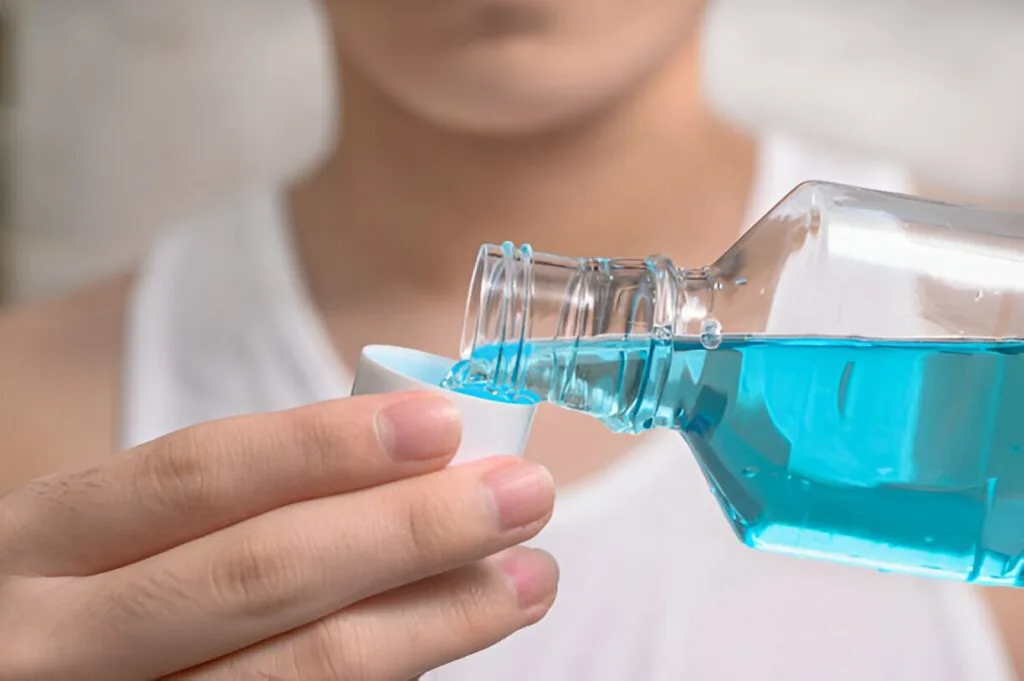
Mouthwash is a helpful tool in maintaining oral hygiene. It reaches areas that brushing and flossing might miss. For those with peri-implantitis, using the right mouthwash can reduce bacteria and inflammation, promoting healthier gums and implants.
When Mouthwash Helps And When You Need Professional Treatment
| Mouthwash May Help | Professional Treatment Needed |
|---|---|
| Mild gum irritation | Bleeding around implant |
| Temporary plaque control | Deep peri-implant pockets |
| Post-treatment maintenance | Bone loss on X-ray |
| Fresh breath support | Pus or discharge |
| Early peri-implant mucositis | Implant mobility |
Peri-implant mucositis may sometimes improve with improved oral hygiene and antibacterial rinses. However, confirmed peri-implantitis involving bone loss usually requires professional intervention.
Essential Oils Mouthwash
Mouthwashes containing essential oils are another good option. These include ingredients like thymol, eucalyptol, menthol, and methyl salicylate. They help reduce plaque and gingivitis, which can be beneficial for those with peri-implantitis. These mouthwashes are available over the counter and are safe for daily use.
Hydrogen Peroxide Mouthwash
Hydrogen peroxide mouthwash can also be helpful. It has antibacterial properties and can reduce inflammation and bleeding gums. However, it should be used with caution. Overuse can irritate the gums and cause other oral health issues.
Fluoride Mouthwash
Fluoride mouthwash helps strengthen tooth enamel and prevent cavities. While it’s not specifically targeted at peri-implantitis, maintaining overall oral health can indirectly benefit those with the condition. Fluoride mouthwash is safe for daily use and can be part of a comprehensive oral hygiene routine.
Saline Rinse
A simple saline rinse can also be beneficial. Saltwater rinses help soothe inflamed gums and reduce bacteria in the mouth. This is a natural and cost-effective way to support oral health. It’s easy to make at home by mixing a teaspoon of salt in a cup of warm water.
Herbal Mouthwash
Herbal mouthwashes, containing ingredients like aloe vera and green tea, have anti-inflammatory and antibacterial properties. They can be a gentle and natural option for those with peri-implantitis. These mouthwashes are often available in health stores or can be made at home.
How to Use Mouthwash for Best Results
To get the best results from mouthwash, follow these steps:
- Brush and floss your teeth first.
- Use the recommended amount of mouthwash.
- Swish it in your mouth for the recommended time, usually 30 seconds.
- Spit it out; do not swallow.
- Avoid eating or drinking for 30 minutes after using mouthwash.
Consult Your Dentist
While mouthwash can be helpful, it’s important to consult your dentist for personalised advice. They can recommend the best mouthwash based on your specific condition and needs. Regular dental check-ups are crucial to monitor and manage peri-implantitis.
Book Your Appointment Now
Conclusion
Peri-implantitis is a serious condition that requires proper management. Mouthwash can play a significant role in maintaining oral health and managing peri-implantitis. Chlorhexidine, essential oils, hydrogen peroxide, fluoride, saline, and herbal mouthwashes all offer benefits. However, it’s important to use them correctly and consult your dentist for the best advice. By incorporating the right mouthwash into your daily routine, you can help protect your dental implants and maintain a healthy smile.
Visit Bridge St Aesthetic and Dental Implant Clinic
At Bridge St Aesthetic and Dental Implant Clinic, we are dedicated to helping you maintain optimal oral health. If you’re dealing with peri-implantitis or need advice on the best mouthwash for your condition, our expert team is here to assist you. Schedule a consultation today and take the first step towards a healthier, brighter smile.
Contact us now to book your appointment and get personalised dental care.
Frequently Asked Questions
Can mouthwash reverse peri-implantitis?
No. Mouthwash may reduce bacteria temporarily, but peri-implantitis usually requires professional treatment to stop bone loss around the implant.
Is chlorhexidine mouthwash safe for dental implants?
Short-term chlorhexidine use is commonly recommended after implant treatment, although prolonged use may cause staining and taste changes.
Which mouthwash is best for peri-implantitis?
Chlorhexidine-based mouthwashes currently have the strongest clinical evidence for managing implant-related inflammation.
Can Listerine cure peri-implantitis?
Listerine may help reduce plaque and bacteria, but it is not considered a treatment for active peri-implantitis.
Should implants bleed during brushing?
Bleeding around dental implants may indicate peri-implant mucositis or peri-implantitis and should be professionally assessed.
Reviewed By:
Dr. Fiona MacLeod
Lead Dentist & Oral Health Educator at Bridge St Aesthetic and Dental Implant Clinic
Last reviewed:
May 2026